
Our feet carry us everywhere we want to go, often without complaint and without receiving much care in return. When you compare the size of your feet to your body, it's remarkable to think about how they manage to keep us balanced, walking, running, and jumping. For all that they do, it's surprising that foot pain isn't talked about more often.
Foot pain may result from accidents, sports, or other traumas. But in many cases, simply standing for long periods in inappropriate shoes can cause discomfort. This can lead to numbness, inflammation in the heels, pain when going up or down stairs, fatigue, or even loss of strength or movement in the feet.
The tissues most commonly affected are the Achilles tendon and the fascia (ligaments) of the sole of the foot. If left untreated, these conditions can become chronic, leading to constant pain when standing or walking, and often mimicking heel spurs.
You may also experience numbness or tingling in your feet, which can sometimes be the result of diabetes or an irritated nerve, often originating in the spine, similar to sciatica or radiculitis.
It's easy to ignore mild foot pain, but it's important to pay attention since it can also be a sign of postural imbalance. Over time, this imbalance may cause pain in your knees, hips, back, and neck.
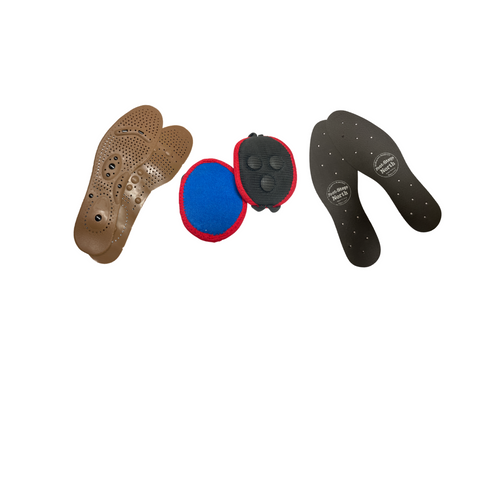
Most foot conditions can be treated conservatively. They may take time to heal but can improve with special exercises that strengthen muscles, tendons, and ligaments. Unless surgery is necessary, treatment typically includes rest, stretching, changing shoes (with guidance from a foot specialist), applying ice, chiropractic adjustments to the spine, hips, and feet, and the use of magnetic insoles. If your ankles feel weak, magnetic ankle supports can also help strengthen them.
This is a safe and cost-effective alternative. Many people have had success with magnetic therapy. Research shows that when a magnetic field is applied to the human body, it creates an electrical current that stimulates the nerves and blocks pain sensations, strengthens the body's cells, reduces inflammation, increases blood circulation, and supports healing. For pain and inflammation, negative polarity should be applied. When used correctly, magnets have no side effects.
That's why magnetic therapy is worth trying. Be sure to choose high-quality magnets, between 700–2500 gauss (the unit of magnetic strength), with clearly marked poles, and always apply the negative pole to the skin. Keep in mind that refrigerator magnets, at only about 10 gauss, have no therapeutic effect. For best results, magnets should be used daily for at least 3–5 weeks.
Our Magnetic Insoles & Foot Support Products
- Flex Insoles Magnetic — Flexible magnetic insoles for everyday comfort and pain relief.
- Bio North Foot Steps — All-north polarity insoles designed for therapeutic magnetic support.
- Magnetic Arch Support Insert — Targeted arch support with magnetic therapy for plantar and heel pain.
- Neo-Magnet Ankle Brace — Magnetic ankle support to strengthen and stabilize weak or injured ankles.
Disclaimer: This information is for educational purposes only and is not a substitute for professional medical advice, diagnosis, or treatment. Always consult your doctor or qualified health provider before starting any new therapy or health regimen.